
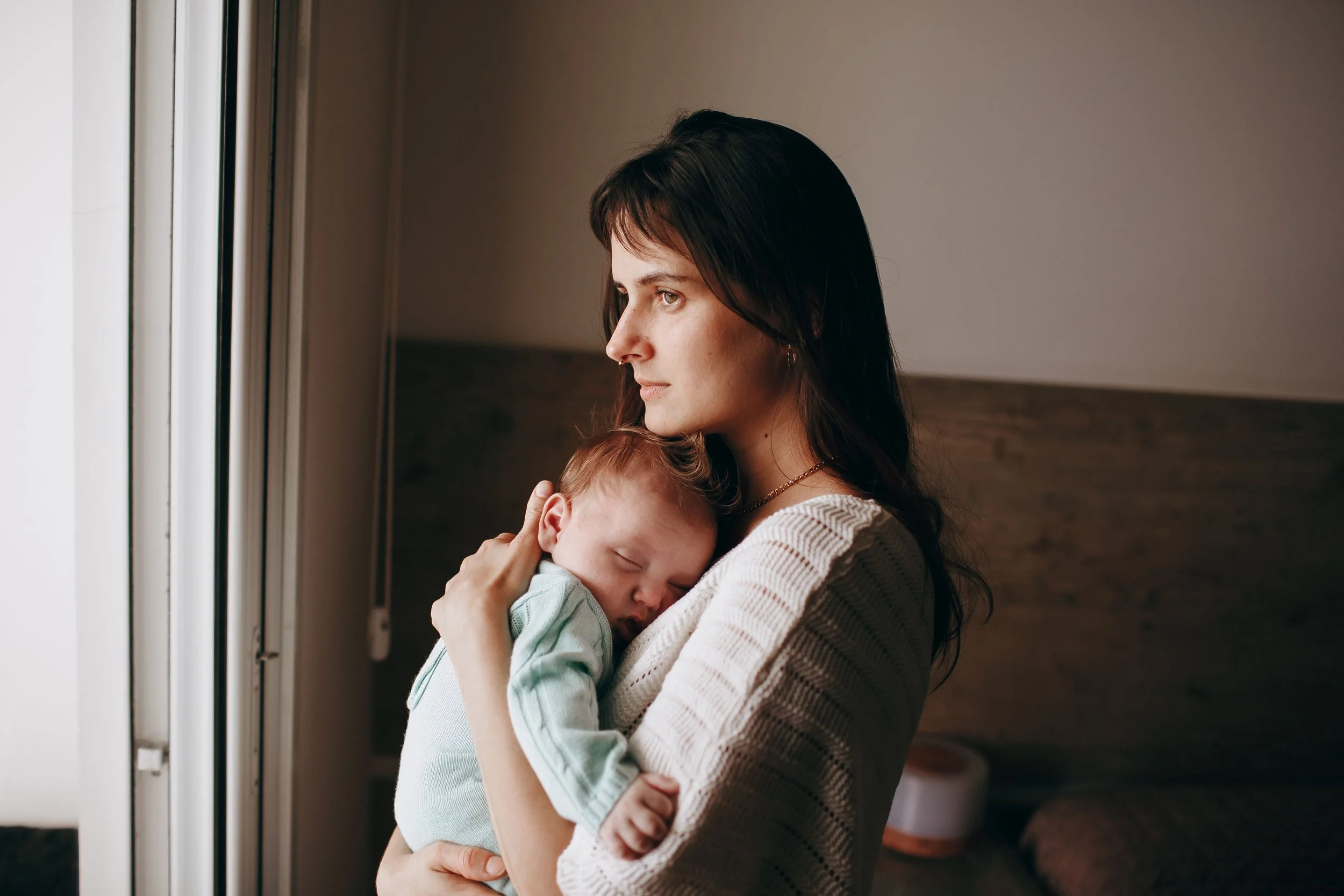
Before I had children, I had an idea of the mother I was going to be.
Perhaps you did too.
And then I had my son, and I found a strength and a love I had never imagined myself capable of feeling.
But motherhood also showed me my own fears and traumas.
It brought things to the surface that I thought I had left behind, and others I hadn’t even realised were still there.
Because there is something about loving a child so deeply that can take you straight back to the child you once were.
As my children grew, I began to notice how often parenting them brought me face-to-face with my own childhood. Sometimes it was in the things I desperately wanted to give them. Sometimes it was in the things I was determined not to repeat. And sometimes it was in my own reactions — those moments when what I was feeling seemed much bigger than what was actually happening in front of me.
For me, parenting my children has also become part of parenting my own inner child.
In trying to give them the freedom to have their own feelings, I have had to think about how my feelings were received as a child. In wanting them to know that they don’t have to make me happy, please me or be grateful for everything I do for them, I have had to look at the expectations I carried as a child myself.
And sometimes, in trying to give my children what I needed then, I have learned to give a little more of it to myself now.
Perhaps that’s one of the things we don’t talk about enough when we talk about motherhood.
We aren’t only raising children.
We are doing it while carrying everything that came before them.
Motherhood doesn’t replace the rest of you
Becoming a mother doesn’t mean that all the other roles in your life conveniently disappear.
You may still be a wife or partner. A daughter. A sister. A friend. A colleague. A business owner. A carer.
You may be managing a home, earning money, worrying about money, maintaining relationships, looking after ageing parents or trying to build something of your own.
And somewhere amongst all those roles, you are still yourself.
Motherhood doesn’t arrive and politely clear the diary.
It is added to a life that already contains relationships, responsibilities, expectations and needs.
I think this is part of what can make motherhood so hard for some of us.
We talk about “becoming a mother” as though we step neatly from one identity into another. But the woman who existed before motherhood doesn’t simply disappear.
She still has ambitions.
She still wants friendship and intimacy.
She may still want meaningful work.
She still has a body that gets tired, a history that affects her, things she wants to experience and sometimes a desperate need for nobody to ask her for anything for five minutes.
None of that means she loves her children any less.
It means she is a whole person.
The mother I imagined had never had children
There can be an uncomfortable distance between the mother we imagined ourselves becoming and the woman we actually are in the middle of ordinary family life.
Before children, perhaps you imagined yourself patient. Present. Calm.
Maybe you were going to do things differently from your own parents.
You wouldn’t shout.
You wouldn’t worry about the small things.
You would listen.
You would enjoy it.
I certainly had ideas about the kind of mother I would be.
But there was one fairly significant flaw in all those plans.
The mother I had imagined had never actually had to raise a child.
She had never been sleep deprived.
She had never asked somebody to put their shoes on six times.
She had never lain awake wondering whether one of her children was okay.
She had never lost her patience and regretted it five minutes later.
She had never tried to meet one child’s needs while another needed her too.
She had never tried to parent while working, worrying, grieving, struggling in a relationship or simply having a terrible day.
She existed under perfect conditions.
I don’t.
Neither do you.
We imagined the moments, not always the weight
Before motherhood, many of us imagine it through moments.
Holding our baby.
Walking to school together.
Bedtime stories.
Birthdays.
Christmas mornings.
Watching our children slowly become themselves.
What is much harder to imagine is the accumulation of ordinary responsibility.
The appointments. The meals. The washing. The school messages. The emotional regulation. The remembering. The planning. The worrying.
The thousand tiny decisions that nobody particularly notices because somehow, you simply make them.
And then there is the emotional weight of loving another human being this much.
The vulnerability of it.
Their happiness matters to you. Their pain matters to you. Their friendships, struggles, health and future matter to you.
Sometimes their pain can feel almost harder to tolerate than your own.
That is a lot for one person to carry.
Especially when that person is simultaneously expected to remember that somebody needs toothpaste.
When you feel like you’ve lost yourself in motherhood
With so much to carry, it isn’t difficult to understand how a woman can begin to feel that she has lost herself in motherhood.
It doesn’t necessarily happen dramatically.
Sometimes it happens quietly.
Your own needs move a little further down the list. Things you once enjoyed become harder to make time for. Conversations revolve around children and logistics. Decisions are increasingly made according to what everyone else needs.
And one day you may realise that you aren’t quite sure what you want anymore.
That can be frightening.
It can also come with guilt.
Because how can you love your children so completely and still miss parts of the woman you were before them?
But those two things can exist together.
You can love being someone’s mother and still miss yourself.
You can be deeply grateful for your family and still want more for your own life.
You can adore your children and sometimes feel exhausted by how much is required of you.
One truth does not cancel out the other.
Perhaps feeling lost isn’t evidence that something has gone wrong.
Perhaps sometimes it is an invitation to become curious about what has changed.
Your children don’t need the imaginary mother
The imaginary mother has one enormous advantage over us.
She only exists in our heads.
She is endlessly patient because nobody has ever tested her patience.
She is always present because nothing else requires her attention.
She never needs anything because we never imagined her having needs.
Perhaps she was never supposed to be the standard.
Our children are growing up with the real us.
The mother who sometimes gets it wrong and comes back.
The mother who can apologise.
The mother who is still learning where her limits are.
The mother who can adore her children and occasionally want to close the bathroom door.
The mother who is changing alongside them.
There is something deeply human in allowing our children to know that version of us.
Not a perfect mother.
A person they can have a real relationship with.
Maybe “Am I a good mother?” is the wrong question
I think many women carry some version of this question around with them.
Am I doing enough?
Am I patient enough?
Am I present enough?
Am I getting this right?
But “Am I a good mother?” is a brutal question.
It asks us to take years of love, mistakes, repair, exhaustion, laughter, worry, connection, frustration and ordinary family life and somehow reduce all of it to a verdict.
Perhaps there are more interesting questions.
What kind of relationship do I want to have with my children?
What happens inside me when parenting feels particularly difficult?
What do I want to carry forward from the way I was raised?
What do I want to leave behind?
Where am I expecting myself to be endlessly available?
Which parts of myself have I pushed aside because there never seems to be enough room for all of me?
What do I need in order to be a person as well as a mother?
And perhaps:
What if becoming the mother I want to be doesn’t require becoming someone else?
The mother you can actually be
There is enormous freedom in letting go of the imaginary mother.
Not because we stop caring about how we parent.
Quite the opposite.
When we stop trying to perform an impossible version of motherhood, perhaps we can become more curious about the mother — and the woman — who is actually here.
What does she need?
What matters to her now?
What has she outgrown?
What is she carrying that was never really hers?
Which parts of herself would she like to find again?
And who might she be becoming?
Those aren’t questions that need immediate answers.
Sometimes we need to live with a question for a while.
Sometimes we need enough quiet to hear our own answer rather than the one we think we are supposed to give.
Motherhood has changed me.
It has shown me some of the strongest parts of myself and some of the most vulnerable. It has made me look backwards at the child I was, while asking me to keep moving forwards with the children I am raising.
And I don’t think that process ever really finishes.
Because underneath motherhood — underneath being a partner, daughter, friend, colleague, carer and all the other roles we accumulate along the way — there is still a woman.
She matters too.
Perhaps the goal was never to become the mother you imagined.
Perhaps it is to discover who you are becoming now.
About Solange
Solange Martins Stanger is the founder of SOL Coaching, a women’s coach, maternity nurse and mother of two, with over 15 years of experience supporting families. She understands how deeply motherhood can change a woman’s sense of herself. Her work offers space for women to feel heard, reconnect with their own needs and explore what they want for their lives—alongside caring for the people they love.