
is this normal? common newborn skin changes Explained
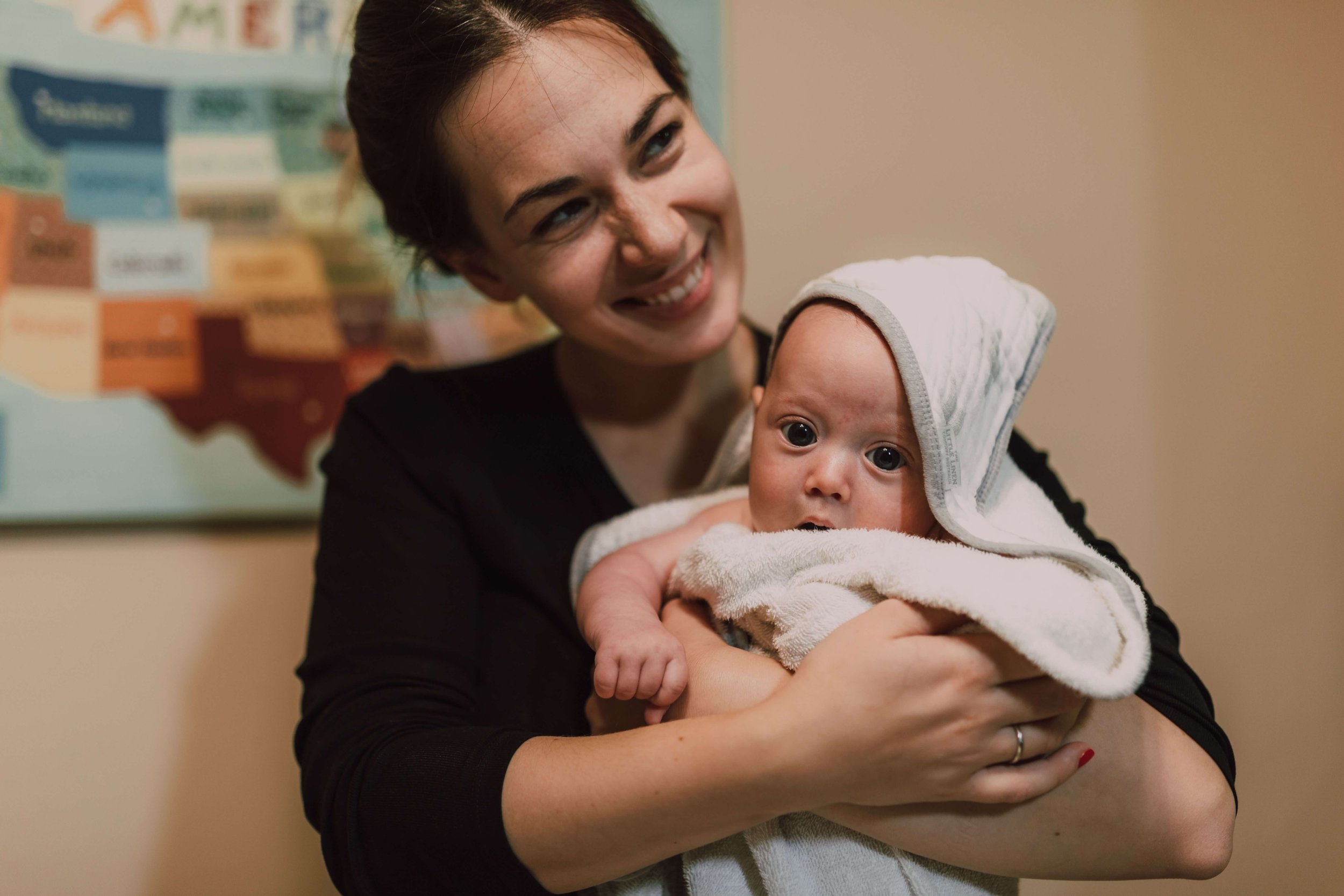
One of the biggest surprises for new parents is that newborn skin rarely looks like the smooth, flawless skin seen in advertisements.
Instead, newborn skin can be:
Spotty
Blotchy
Dry
Peeling
Red
Flaky
Covered in tiny bumps
The good news is that many newborn skin changes are completely normal and temporary.
Understanding what is normal, what usually improves on its own, and when to seek medical advice can save parents a great deal of worry during those early weeks.
Newborn Skin Is Still Adjusting
For nine months, your baby’s skin has been surrounded by warm amniotic fluid.
After birth, it suddenly has to adapt to air, clothing, nappies, temperature changes, and the outside world.
As a result, newborn skin often goes through a period of adjustment.
Many of the changes that worry parents are actually signs that this adjustment is taking place.
Vernix: Nature’s First Moisturiser
Some babies are born covered in a white creamy substance called vernix.
Vernix acts as a natural protective barrier and moisturiser.
In the past, it was often washed away quickly after birth.
Today, many healthcare professionals recommend allowing vernix to absorb naturally into the skin whenever possible.
Lanugo: The Fine Baby Hair
Some babies are born with a fine layer of soft hair on their shoulders, back, ears, or face.
This is called lanugo.
It is completely normal and usually disappears naturally during the first weeks or months of life.
Peeling Skin
Many newborns develop peeling skin during the first days and weeks of life.
This is particularly common in babies born after their due date.
Peeling often appears on:
Hands
Feet
Ankles
Wrists
It usually settles naturally without treatment.
Milia
Milia are tiny white spots that often appear on:
The nose
Chin
Cheeks
They are caused by trapped skin cells and are extremely common.
Milia do not require treatment and should not be squeezed.
They usually disappear on their own within a few weeks.
Baby Acne
Baby acne often appears between two and six weeks of age.
It typically looks like small red or white spots on the face.
Parents sometimes worry that they are doing something wrong or that the skin needs treatment.
In most cases, baby acne is harmless and improves on its own.
Avoid scrubbing the skin or using acne treatments designed for older children or adults.
Erythema Toxicum: The Rash That Looks Scary But Usually Isn’t
One of the most alarming newborn rashes is erythema toxicum.
It can look dramatic, with red blotches and small spots appearing on different parts of the body.
Despite its frightening name, it is usually harmless and very common.
The rash often comes and goes and generally disappears without treatment.
Stork Bites And Angel Kisses
These common pink birthmarks often appear on:
Eyelids
Forehead
Back of the neck
They are caused by tiny blood vessels close to the surface of the skin.
Many fade significantly during infancy.
Blue-Grey Birthmarks
Some babies are born with blue-grey patches, often on the lower back or buttocks.
These are particularly common in babies with darker skin tones.
They are harmless and usually fade over time.
Because they can sometimes resemble bruises, it can be helpful for healthcare professionals to document them at birth.
Newborn Skin Colour Can Change Too
Newborn skin colour can vary throughout the day.
Many healthy babies will occasionally have:
Mottled skin
Red skin after crying
Bluish hands and feet when cold
These changes are often normal.
However, blue lips, a blue tongue, or persistent blue colouring around the face should always be assessed promptly by a healthcare professional.
Heat Rash
Heat rash develops when babies become too warm and sweat ducts become blocked.
It often appears as tiny red bumps.
Heat rash is more common when babies are overdressed or during warmer weather.
Keeping babies comfortably cool and avoiding excessive layers usually helps.
Dry Skin
Many newborns experience dry skin during the first few weeks.
Parents often assume they need lots of creams and lotions.
In reality, healthy newborn skin often needs very little intervention.
Do Babies Need Lots Of Products?
Many parents are surprised to learn that newborn babies usually do not need complicated skincare routines.
In fact, one of the most common mistakes I see is putting too many products on a baby’s skin too soon.
For healthy newborn skin:
Less is often more
Fragrance-free products are generally best
Avoid unnecessary products
Allow the skin time to adapt naturally
Just because a product is marketed for babies does not necessarily mean it is needed.
Food-Based Oils And Baby Skin
Many families are surprised to learn that “natural” does not automatically mean better.
Research suggests that some oils, particularly certain food-based oils such as olive oil, may not support the developing skin barrier as well as previously thought.
Researchers also believe that, particularly in babies with eczema or a damaged skin barrier, exposure to food proteins through the skin may play a role in allergy development in some susceptible children.
For this reason, many specialists recommend keeping newborn skincare simple and being cautious about applying products containing food ingredients, especially if there is a strong family history of allergies or eczema.
Bathing A Newborn
Many parents assume that babies need regular baths from birth.
In reality, newborns do not get particularly dirty.
Personally, I tend not to bath healthy newborns until the umbilical cord has fallen off and the area has healed well.
During those early days, babies can be kept perfectly clean with:
Nappy changes
Gentle cleaning of skin folds
Wiping away milk or spit-up
Top-and-tail washing when needed
I find this gives a baby’s skin time to adjust to life outside the womb without unnecessary drying or irritation.
Once the cord has separated and healed, bathing can become a lovely part of family life.
Do Babies Need Soap?
Many parents are surprised to learn that healthy newborns do not need soap in every bath.
Warm water alone is often perfectly adequate.
Frequent use of soap, particularly fragranced products, can contribute to dry or irritated skin.
In the early weeks, simple is often best.
Cradle Cap
Cradle cap appears as yellowish, greasy, flaky patches on the scalp.
Although it can look concerning, it is usually harmless and not caused by poor hygiene.
Parents are often told to simply leave it alone. While mild cradle cap may improve over time, I have also seen babies develop very thick crusts that become extensive and difficult to remove when left untreated.
For that reason, I generally recommend treating cradle cap rather than waiting for it to disappear on its own.
In my experience, the most effective approach is:
Apply a cradle cap treatment cream or suitable emollient to soften the scales.
Leave it on for the recommended time.
Wash the scalp with a gentle baby shampoo.
Use a fine baby comb or soft brush to gently lift and remove the loosened flakes.
The goal is not to remove everything in one session.
Instead, gently remove a little at a time over several days or weeks.
Avoid forcefully pulling off scales that are firmly attached, as this can irritate the skin underneath.
With regular gentle treatment, most cases improve significantly and can often be cleared completely.
Newborn Breast Swelling
Some newborn babies develop swollen breast tissue during the first weeks of life.
This can happen in both girls and boys and is usually caused by maternal hormones.
It often settles naturally over time.
Try not to squeeze or massage the area.
Vaginal Discharge In Baby Girls
Some baby girls may have a small amount of white discharge or even a tiny amount of blood-tinged discharge during the first days after birth.
This can be surprising for parents but is usually a normal response to maternal hormones and typically resolves on its own.
Nappy Rash
Most babies experience nappy rash at some point.
Common causes include:
Moisture
Friction
Sensitive skin
Prolonged contact with urine or stool
Frequent nappy changes, gentle cleaning, and barrier creams can often help.
Some babies may also react to particular nappy brands, wipes, fragrances, or skincare products.
If a rash does not improve or appears severe, medical advice should be sought.
When Should I Seek Medical Advice?
Contact a healthcare professional if your baby:
Has a fever
Appears unwell
Has blisters
Has pus or signs of infection
Develops a rapidly spreading rash
Has a rash that does not fade when pressed
Has skin changes that concern you
Trust your instincts.
Parents often notice when something doesn’t seem right.
A Final Thought
One of the most surprising things about newborn skin is how quickly it changes.
A spot, rash, patch of dry skin, or birthmark that seems alarming today may look completely different next week.
Newborn skin is often wonderfully imperfect.
Spots, flakes, peeling, rashes, birthmarks, and colour changes are all part of the remarkable adjustment to life outside the womb.
Most are harmless.
Most are temporary.
And sometimes the best thing we can do is give healthy newborn skin time to do exactly what it was designed to do.
About Solange
Solange Martins Stanger is the founder of SOL Coaching, a women’s coach, maternity nurse and mother of two, with over 15 years of experience supporting families. She understands how deeply motherhood can change a woman’s sense of herself. Her work offers space for women to feel heard, reconnect with their own needs and explore what they want for their lives—alongside caring for the people they love.